Cardiopulmonary resuscitation (CPR) is a critical life-saving technique. It is an emergency procedure used when the heart stops beating. This condition is also known as cardiac respiratory arrest. This procedure involves chest compressions. They are frequently combined with artificial ventilation. The goal is to preserve brain operation and maintain continuous circulation. This continues until spontaneous breathing and the heartbeat can be restored.
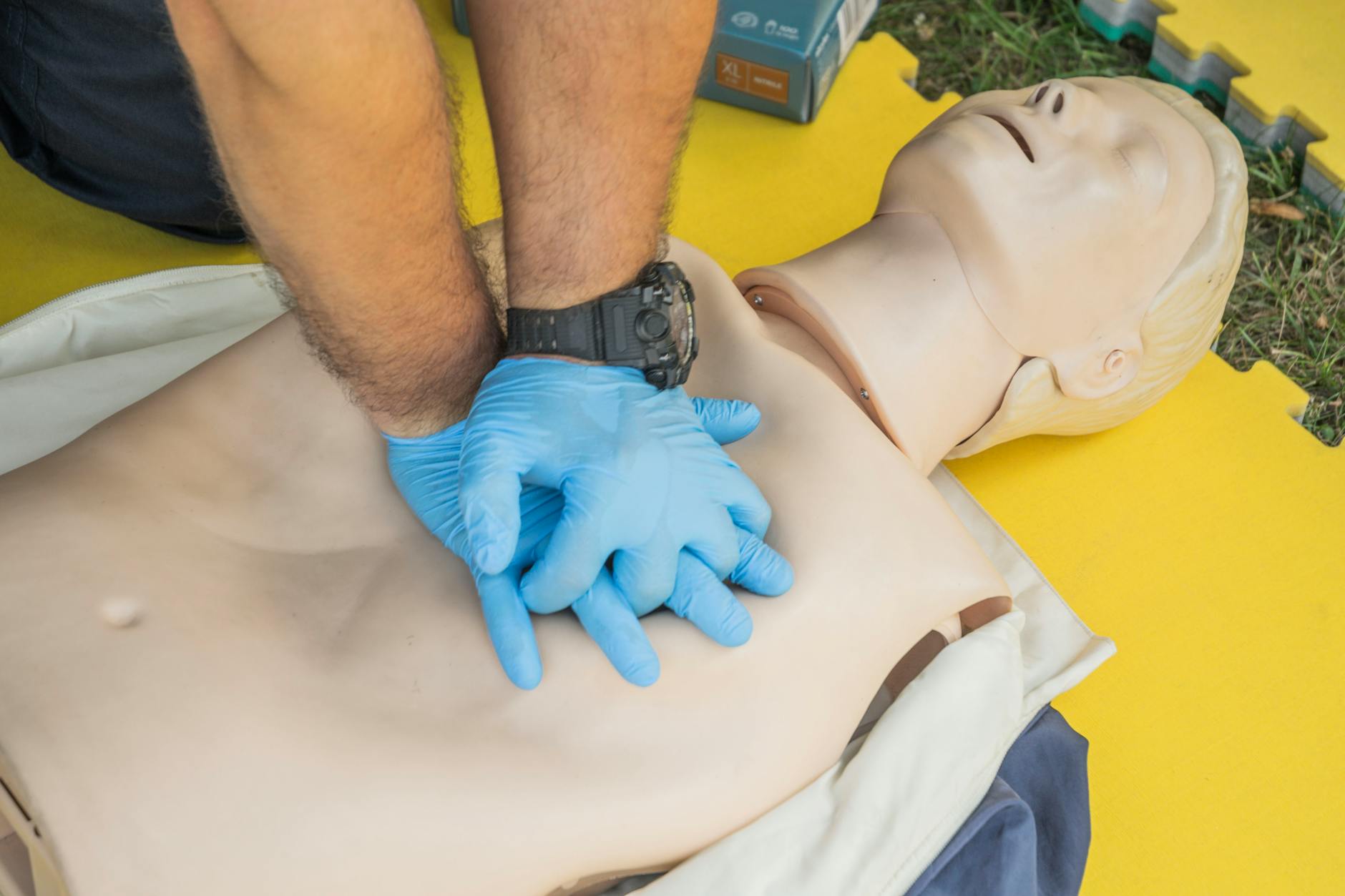
According to American Red Cross (2025), Did you know that
- Slightly over 70% of all out-of-hospital cardiac arrests occur in the home. This suggests that you may be in a position of performing CPR on a loved one.
- Bystander intervention and action is vital.
- Increased public awareness and high-quality CPR training has an immense impact on survival outcomes of someone experiencing cardiac arrest.
- Each minute of delay in using an Automated External Defibrillator (AED) decreases survival chances by 10%. Performing immediate CPR is also crucial to increase the chance of survival.
- Bystander action is crucial: because it directly impacts the victim’s survival chances.
- Increased public awareness and CPR training:
In our training workshops, attendees receive education about the history of CPR. They learn what CPR is and explore the different types of CPR. Participants also discover how to keep communities safe by being equipped with essential lifesaving skills.
Sign up for your training and certification today!
 Breath 4 Life CPR Training Services
Leave a comment